
Women of the Ohio River
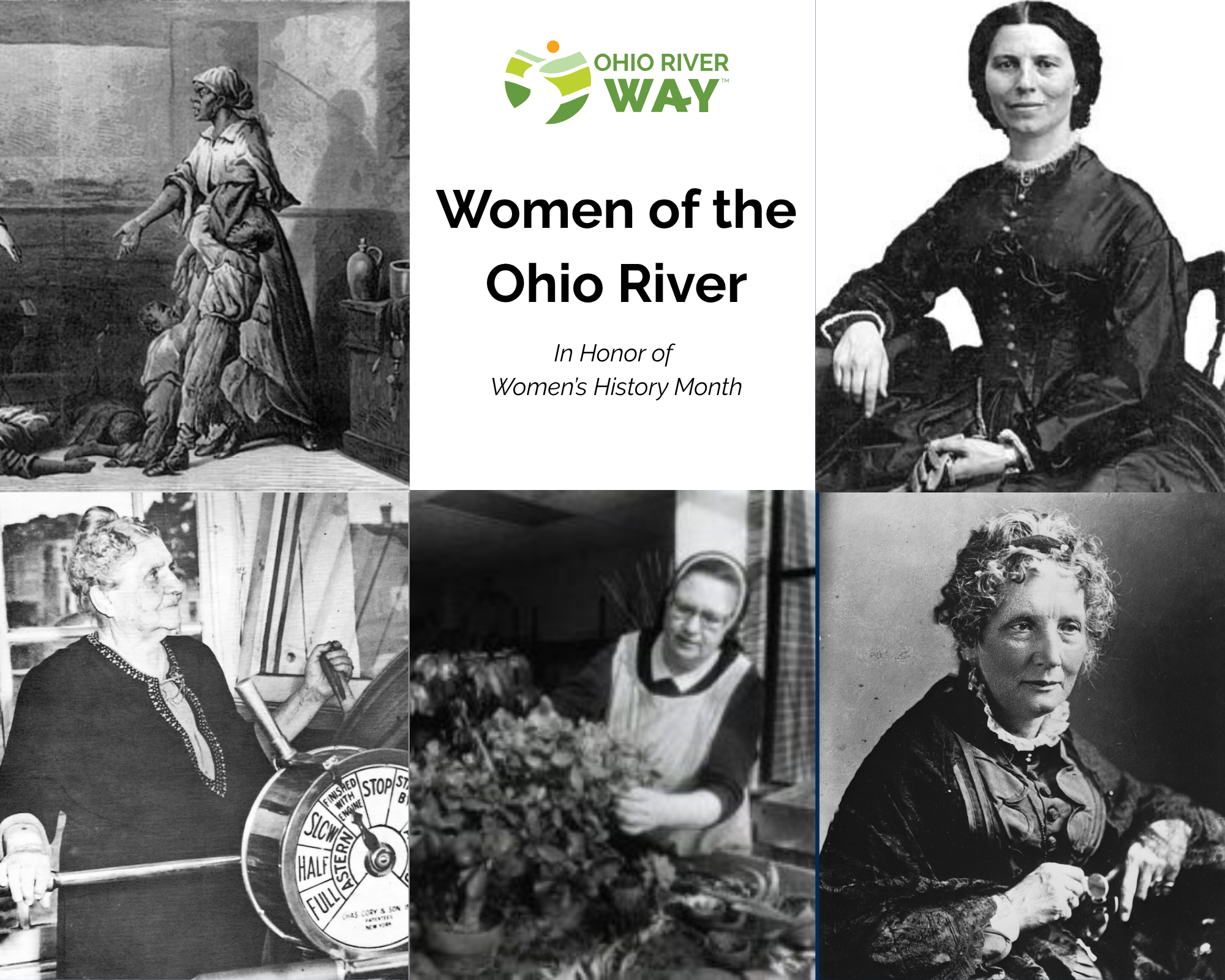
Women have played an important role in shaping Ohio River history and continue to shape its future. Though it would be impossible to name all of the incredible women who have advocated and led the charge on its currents, here are just a few stories in honor of Women’s History Month.
Margaret Garner and the river as a path to freedom
By the 1800s, the Ohio River had become a powerful symbol of freedom for many enslaved people in Kentucky trying to reach Ohio. One of the most well-known stories is that of Margaret Garner. In January 1856, Garner and her family escaped slavery in Kentucky and crossed the frozen Ohio River into Cincinnati. Their escape ended in tragedy when authorities caught up with them, and Garner killed her young daughter rather than allow her to be returned to slavery. The case shocked the nation and later helped inspire Toni Morrison’s Beloved. Garner’s story is a devastating yet stark reminder that the Ohio River was not only a geographic boundary but a crucial line between slavery and freedom.
Harriet Beecher Stowe and the river’s influence on American literature
Harriet Beecher Stowe also has a strong connection to the Ohio River. She lived in Cincinnati beginning in 1832, just across the river from slaveholding Kentucky. Living there gave her a close view of the realities of slavery and the tension that shaped life on both sides of the river. Those experiences helped inform Uncle Tom’s Cabin, which was first published in 1852 and became one of the most influential books of its time. You can learn more about the author at the Harriet Beecher Stowe House in Cincinnati, OH.
Mary Becker Greene took command of the river
Mary Becker Greene is widely recognized as the first woman licensed as both a steamboat pilot and captain on the Ohio River. She learned fervently about river navigation and built a reputation for skill and leadership at a time when the industry was overwhelmingly male-dominated. She later helped lead Greene Line Steamers, becoming one of the best-known women in steamboat history.
Clara Barton and flood relief on the Ohio River
In February 1884, severe flooding devastated communities throughout the Ohio River Basin, leaving over 5,000 families without a home. Clara Barton, from North Oxford, Massachusetts, led one of the American Red Cross’s first major domestic relief efforts in response. She helped organize aid for thousands of families affected by the flood. As the President of the American National Red Cross for twenty-two years, Barton additionally adopted the framework of the Red Cross to fit the needs of the nation, not only during wartime but in “peacetime” when natural disasters occurred.
Shaping the river today
Women continue to shape the ecology and preservation of the Ohio River and its communities through science, conservation, education, tourism, advocacy, recreation, and storytelling. They are researching its ecosystems, safeguarding its history, organizing events in river towns, leading nonprofits, building trails, teaching students, and helping communities imagine a stronger future tied to the river.
For example, Sister Mary Laurence Budde was instrumental in acquiring the Biology Field Station for Thomas More University and served as its first director. She initiated the University’s long-standing fish bioassessment of the river, and served as a mentor to hundreds of students throughout her over 30 years at the school. Thomas More University’s outdoor classroom, interpretive nature trail, and the Budde house are all named in her honor.